Universities
Heidelberg University Germany: Complete Guide for International Students

Asfandyaar Mazhar
Universities
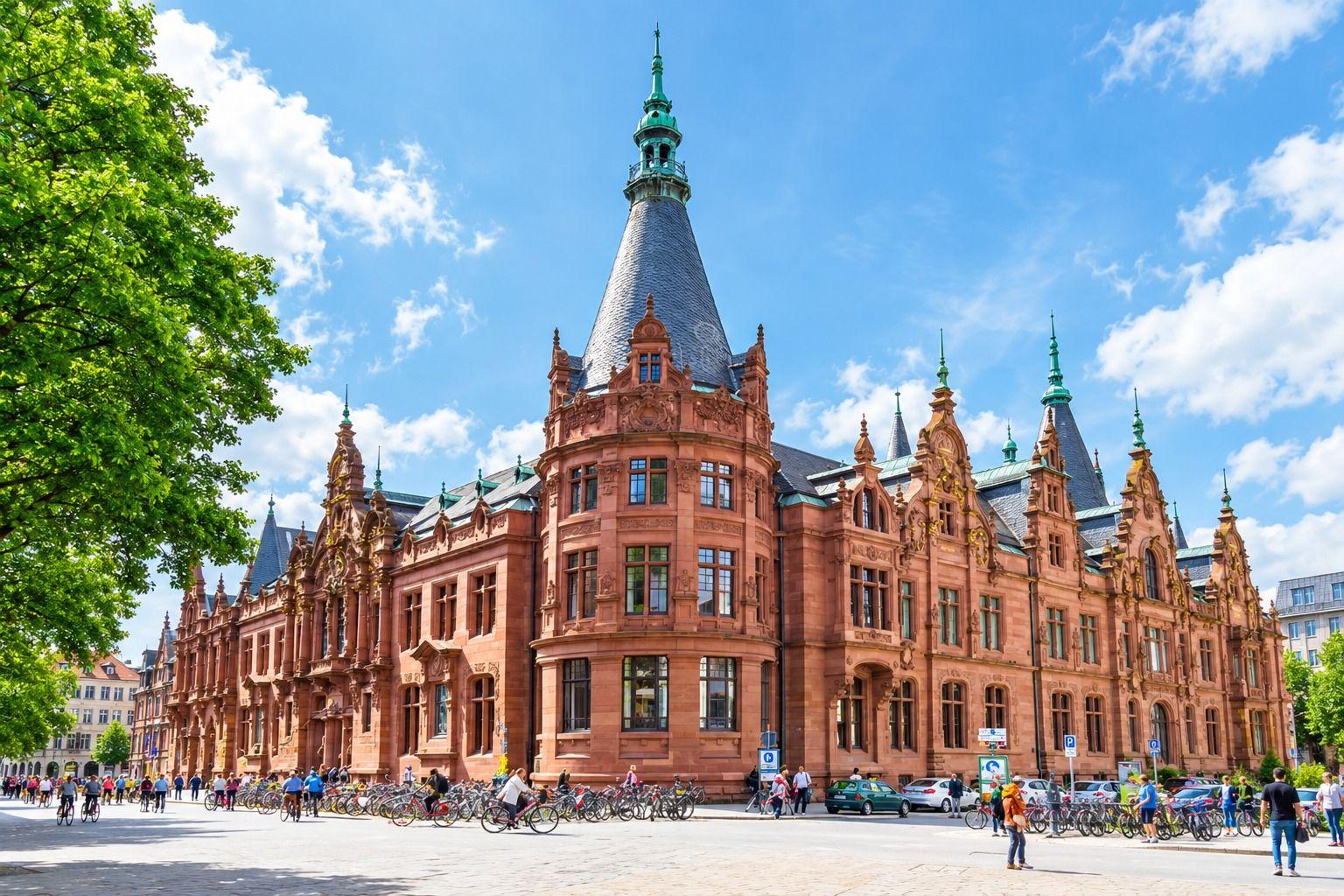
Heidelberg University Germany is one of the most respected names in European higher education. Officially known as Ruprecht-Karls-Universität Heidelberg, the university was founded in 1386 and is the oldest university in Germany.
Located in Heidelberg, it combines centuries of academic tradition with international study opportunities and an academic environment today.
For students planning to study in Germany, Heidelberg University Germany attracts attention because of its broad range of programs, research culture, international community, and reputation across science, medicine, humanities, and social sciences.
This guide explains the university’s courses, admission process, tuition fees, scholarships, language requirements, and student life for international applicants.
One of the main reasons students consider Heidelberg University Germany is its research-focused academic environment. The university provides study opportunities across natural sciences, life sciences, medicine, law, economics, social sciences, and the humanities.
Heidelberg is also internationally oriented. Students from many countries study and conduct research there, creating a diverse academic environment. The city sits along the Neckar River and combines historic architecture, research institutions, cultural attractions, and modern student facilities.
Students interested in postgraduate education can find a wide selection of master’s and doctoral opportunities, including several programs taught in English.
Heidelberg University Germany offers undergraduate, postgraduate, state examination, and doctoral study options. Program availability and entry requirements vary by subject.
Popular academic areas include medicine, biosciences, molecular sciences, physics, astronomy, mathematics, computer science, economics, law, psychology, social sciences, languages, literature, history, philosophy, cultural studies, and theology.
The university also offers English-taught programs, especially at master’s level. Examples include Biomedical Engineering, Molecular Biosciences, Data and Computer Science, Physics, Economics, Scientific Computing, Transcultural Studies, International Health, and Mathematics of Machine Learning and Data Science.
Students should check the language and academic requirements for their chosen program because they differ across departments.
Admission to Heidelberg University Germany depends on the applicant’s nationality, previous qualifications, selected degree, and language of instruction.
For bachelor’s programs, international applicants generally need a school qualification recognised as equivalent to the German university entrance qualification. If a foreign school certificate does not provide direct university access in Germany, additional academic preparation may be required.
Master’s applicants normally need a recognised bachelor’s degree in a relevant or closely related subject. Individual programs may set minimum academic requirements and can request specific previous coursework, language certificates, documents.
Typical documents may include academic transcripts, certificates, proof of language proficiency, a passport copy, and program-specific materials. Some postgraduate programs may also ask for a CV, motivation letter, research information, or evidence of relevant academic experience.
Language requirements are important when applying to Heidelberg University Germany. Many undergraduate programs are taught mainly in German, so applicants may need an accepted German-language qualification at the level specified by their chosen course.
Heidelberg also offers several English-taught degree programs, for master’s students. These programs may require proof of English proficiency depending on the admission regulations.
Applicants should not assume that an English-taught program removes every German-language requirement. Certain courses may still require some German knowledge for enrolment, academic activities, or completion. Always review the requirements of the specific program before applying.
For many international students, cost is a major part of the study-abroad decision. Heidelberg University Germany is a public university, but studying is not completely free for every international applicant.
International students from outside the EU and EEA who are subject to Baden-Württemberg tuition rules generally pay €1,500 per semester for eligible bachelor’s and consecutive master’s programs. Exemptions may apply in certain circumstances.
Students also pay a semester contribution. For the winter semester 2026/27, the university lists the semester fee at €189.80.
In addition to university charges, students need to budget for accommodation, health insurance, food, transportation, study materials, and personal expenses. Heidelberg University currently uses €992 per month as a general minimum living-cost benchmark for international students for financial planning and visa-related purposes.
Students searching for Heidelberg University Germany scholarships should research funding opportunities early. Scholarships are competitive, and eligibility can depend on nationality, academic performance, study level, and the funding organisation.
One option is the Deutschlandstipendium, which supports students of different nationalities based on academic achievement and other selection criteria. It provides €300 per month for successful recipients.
International students can also explore funding through German scholarship organisations, academic exchange programs, foundations, research projects, and external sponsors.
Because full scholarships are limited, applicants should create a realistic financial plan instead of relying entirely on scholarships or part-time employment.
Application deadlines at Heidelberg University Germany differ by degree type and admission category.
For several undergraduate programs without admission restrictions or entrance examinations, the winter-semester application period generally runs from June 1 to October 31. For undergraduate programs with admission restrictions or entrance examinations, it generally runs from June 1 to July 15.
Medicine, dentistry, and pharmacy have separate admission procedures and deadlines. Master’s programs also follow program-specific application periods, so students should check their exact course rather than relying on one general university deadline.
Submitting documents early is advisable because missing certificates, translations, or language results can delay an application.
Studying at Heidelberg University Germany offers more than classroom education. Heidelberg is strongly shaped by its student population and academic institutions. The city combines a historic old town with libraries, research centres, cafes, public transport, cultural venues, and outdoor spaces.
International students can experience German culture while studying in a multicultural academic community. Learning basic German can also make everyday life easier, even for students enrolled in an English-taught program.
Accommodation should be planned early because student housing and private rentals can be competitive. Applicants should include housing costs and initial expenses such as deposits in their budget before travelling.
Heidelberg University Germany can be an attractive choice for students seeking a research-oriented education at a historic public university.
Its academic range, English-taught postgraduate options, international environment, and location in a university city make it relevant to students worldwide.
Applicants should evaluate language requirements, tuition rules, living expenses, and admission criteria for their selected program before applying.
Careful preparation is important for non-EU students who may need to arrange tuition payments, visa documentation, proof of finances, and accommodation.
For students who meet the academic and language requirements, Heidelberg University Germany offers access to a long-established academic environment with opportunities for study and research.
Yes. Heidelberg University is a public research university located in Heidelberg, Baden-Württemberg.
Yes. Several programs, at master’s level, are taught fully or partly in English.
Many non-EU and non-EEA students are required to pay €1,500 per semester, although exemptions can apply.
It depends on the program. Many bachelor’s courses require German, while several master’s programs are available in English.
Yes. Opportunities include the Deutschlandstipendium and other funding schemes, but eligibility and availability vary.
Copyright © 2024 Edify Elite. All rights reserved.