News
Punjab Boosts Transparency in Board Exams With Digital Verification for Students

Asfandyaar Mazhar
News
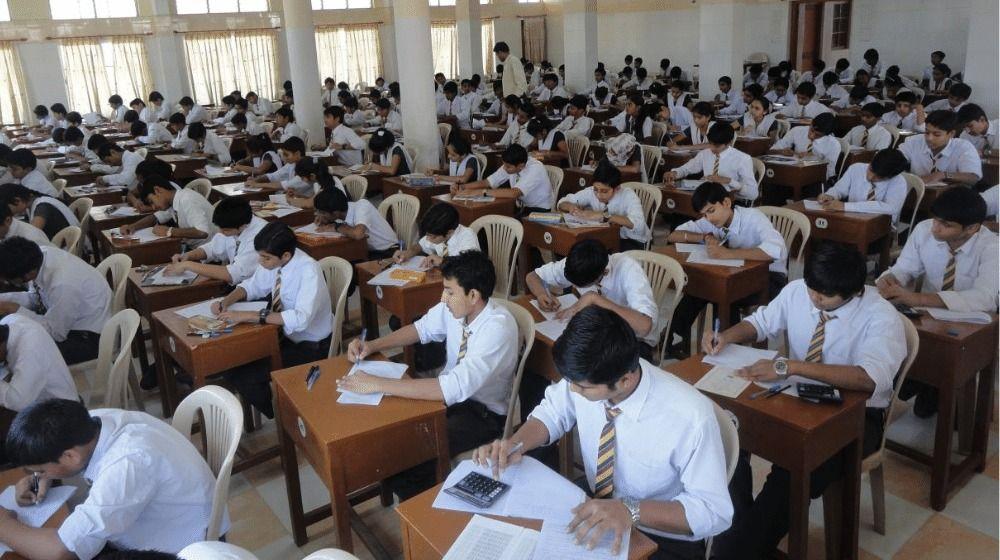
The Punjab government has introduced a significant change to the way annual board examinations for Matriculation and Intermediate students will be administered across the province.
Students scheduled to sit for the 2026 examinations will now have to undergo digital biometric attendance verification before entering examination halls, marking a major milestone in efforts to modernize and secure the academic assessment process.
The decision was taken in a high-level meeting of the Boards of Intermediate and Secondary Education (BISE) in Lahore.
The session, attended by senior education officials from all nine boards in Punjab, was chaired by Muzammil Mehmood, who heads the Task Force Committee on Boards.
Their focus was not just on biometric checks, but on a series of reforms aimed at restoring credibility and fairness to board exams.
At its core, the new requirement will see students have their identities verified digitally using biometric data, likely fingerprints, before they are allowed into the examination centers.
This system is designed to stop impersonation and ensure that only those who are registered to take the exams are able to appear.
For years, one of the biggest complaints from educators, parents, and the public has been the misuse of proxy candidates and the worry that exam halls are not always secure. Officials believe that biometric checks will make such cases far less likely.
Board examinations, both Matric (typically classes 9 and 10) and Intermediate (classes 11 and 12), are crucial academic milestones for students. Performing well in these exams affects future education pathways, admissions, and, for many, career opportunities.
For decades, the system in Punjab relied on manual attendance rolls and identity checks by invigilators.
But these methods have repeatedly been accused of being vulnerable to manipulation. Experts and parents have long called for a more dependable solution.
Biometric technology aims to provide that. By linking each student’s identity to a unique physical attribute, such as a fingerprint, the system can verify at the gate that the person sitting for the exam is who they say they are.
Education authorities have said this will reduce fraudulent entries, strengthen the integrity of results, and build public confidence in the examination system.
This reform mirrors a broader global trend in education where governments are adopting digital tools to manage academic assessments.
Similar biometric systems are used in employment testing, secure facility access, and even in some higher education exams around the world.
Reasonable Countries to Study Abroad from Pakistan 2026: Turkey, China, Malaysia & More
Punjab to Extend Free Laptop Scheme to Private University Students in 2025
The discussions in Lahore went beyond just attendance verification. Practical examinations, long criticized for inconsistent marking and oversight, were also a central topic.
Under the new proposals, practical exams are expected to be given the same level of scrutiny as written papers, with standardized criteria for marking and monitoring across all boards.
This aims to address complaints that practical scores can vary widely from one board to another or be influenced by subjective judgment.
To strengthen oversight during practical assessments, officials floated the idea of installing CCTV cameras in laboratories and practical exam venues. Recording the testing environment should help deter malpractice and provide a reviewable record if irregularities are suspected.
Officials also discussed moving towards a digital marking system, where both practical and written papers are entered and stored electronically. Such a system could reduce errors caused by physical handling and minimize the opportunity for tampering.
Throughout the meeting, there was a clear emphasis on creating a more uniform and transparent system.
Too often, students and parents felt that different boards had different standards, and that bias or outside influence could sway outcomes.
The officials say that with biometric checks, standardized practical assessments, digital marking, and more robust monitoring, board exams will be fairer and more credible.
For students preparing for the 2026 Matric and Intermediate exams, these changes will introduce a new protocol on exam day.
Arriving at the center, candidates can expect to be asked to authenticate their identity with biometric tools before going through the usual roll call and seat assignment.
Schools and boards have said that detailed guidelines will be distributed to schools ahead of time so that there are no surprises when the exams begin.
Parents and educators say they generally welcome the reforms, though some have pointed out potential challenges.
For instance, reliable biometric systems require proper infrastructure, stable power, trained staff, and contingency plans for equipment failure.
In rural areas or smaller testing centers, ensuring that these systems work smoothly may need extra support and training. But most agree that the overall direction, towards greater fairness and transparency, is a positive development.
Officials are also considering better compensation for exam supervisors and staff to encourage integrity and reduce the chance of pressure or influence on the ground.
By pairing technology with stronger human oversight, the province hopes to change long-held perceptions about the fallibility of board exams.
The biometric requirement for the 2026 board exams is scheduled to roll out before the exam season begins in March.
With millions of students across Punjab preparing for these tests, the reforms are expected to take effect immediately and uniformly across the province’s educational boards.
Education authorities have indicated that they will monitor the first year closely and make adjustments based on feedback from students, schools, and administrators.
Punjab’s move reflects a broader commitment to modernize its educational infrastructure.
By blending digital tools with traditional examination processes, the province aims to uphold merit and ensure that young students can sit for their exams in an environment that is secure, fair, and respected.
Copyright © 2024 Edify Elite. All rights reserved.